Accounting, manufacturing and ERP guides for growing businesses
Practical writing on running your business — tax compliance, inventory, batch costing, payroll, and what AI actually changes about accounting.
How to manage Factory operations
ERES cloud ERP links shop‑floor planning, inventory, payroll and tax compliance, giving Pakistani factories real‑time visibility, automated work‑orders and AI‑driven insights.
Read article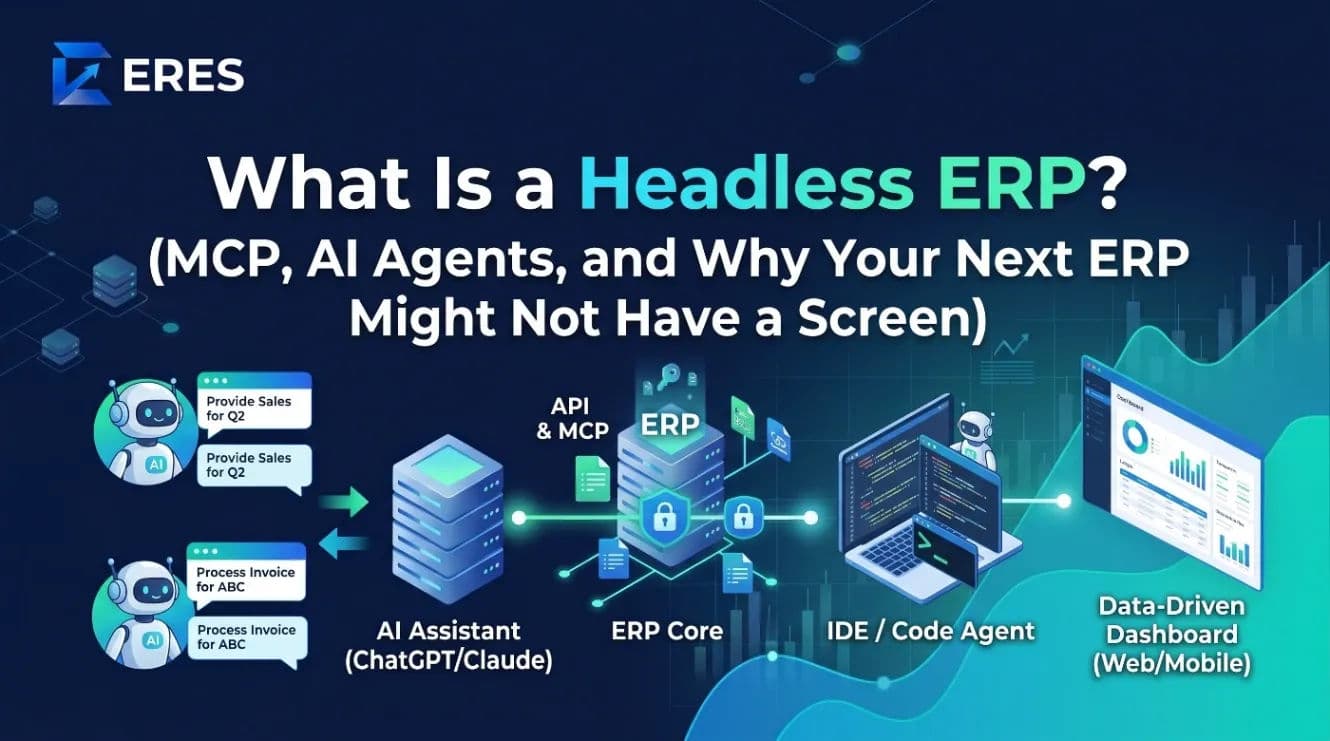
What Is a Headless ERP? MCP, AI Agents and Why Your Next ERP Might Not Have a Screen
A headless ERP exposes its accounting, inventory and operations as tools an AI agent can call — over the Model Context Protocol (MCP), bound to your login and permissions. Here is what that means, how OAuth keeps it safe, what read and write tools look like, and the prompts people actually use.
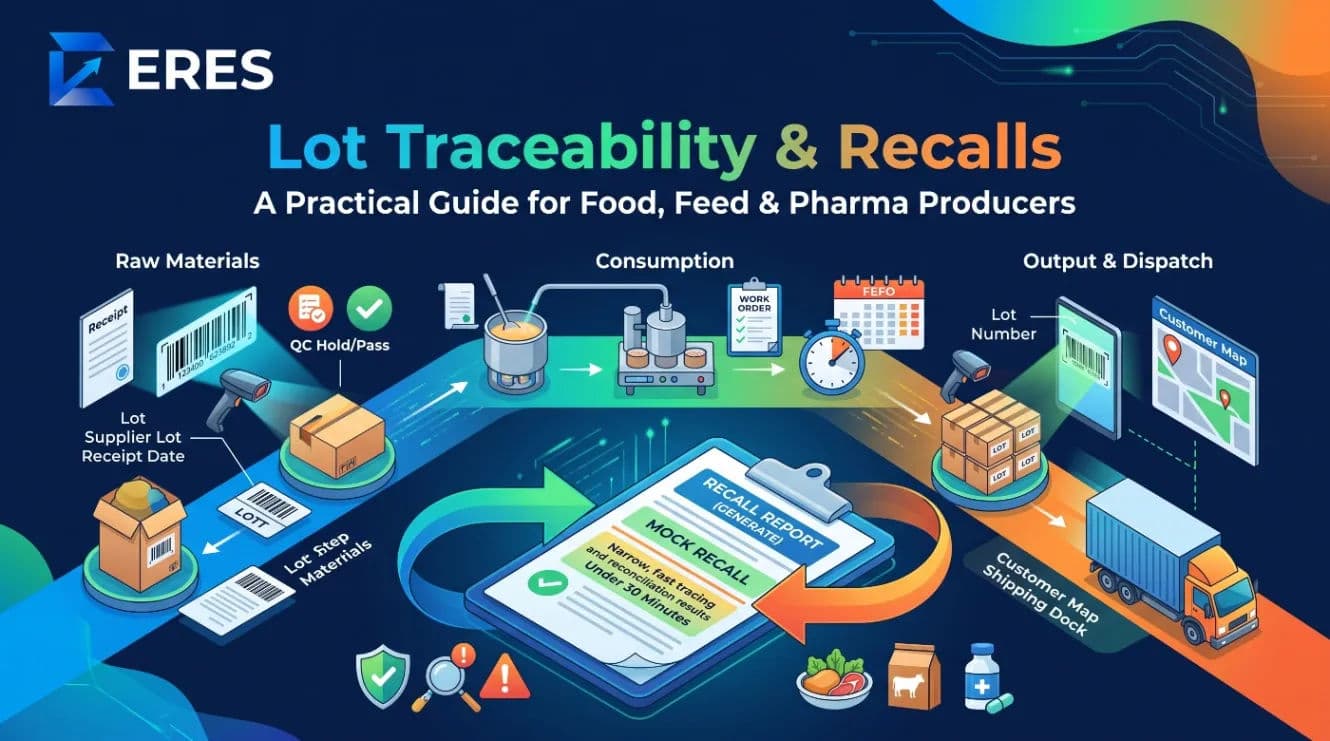
Lot Traceability and Recalls: A Practical Guide for Food, Feed and Pharma Producers
Lot traceability means being able to answer two questions in minutes: which raw-material lots went into this finished batch, and which customers received it. This guide covers backward and forward tracing, FEFO, what a recall report must contain and how to run a mock recall drill.
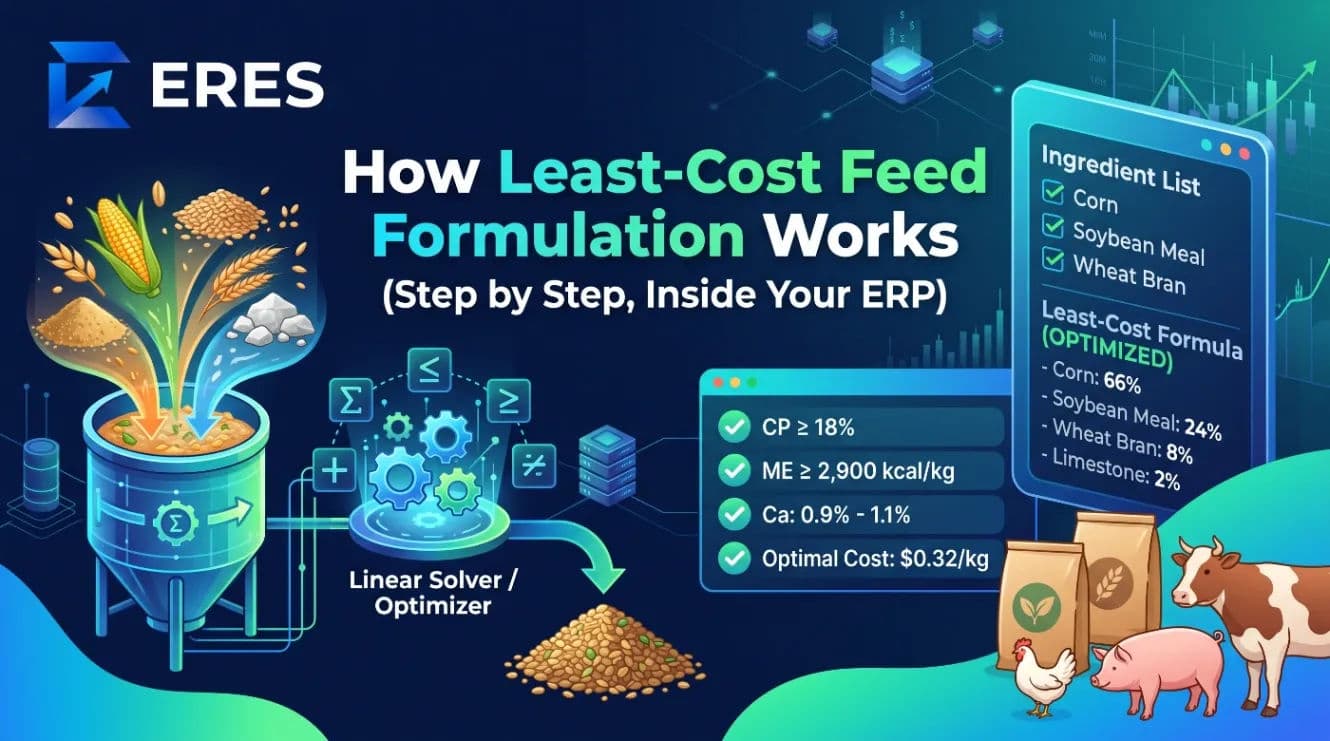
Least-Cost Feed Formulation Explained: How the Math Works and How to Run It Without a Spreadsheet
Least-cost feed formulation finds the cheapest mix of ingredients that still meets every nutrient target. Here is how the linear programme works, what shadow prices and entry prices tell you, why a spec can be infeasible, and how to run it inside your ERP instead of a spreadsheet.
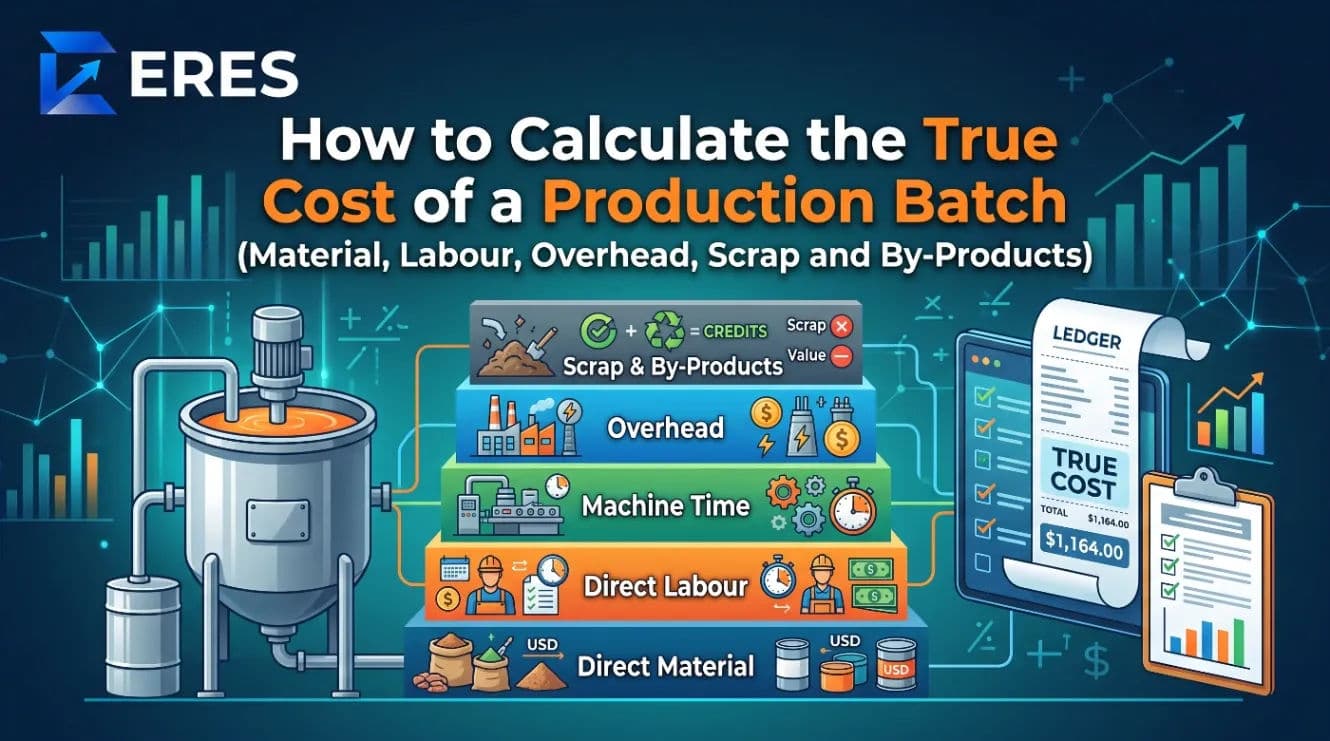
How to Calculate the True Cost of a Production Batch (Material, Labour, Overhead, Scrap and By-Products)
A production batch costs more than its ingredients. This guide shows how to build up the real cost of a batch — material at actual lot cost, labour and machine time, overhead absorption, scrap, by-product credits — with a worked USD example and the journal entries behind it.
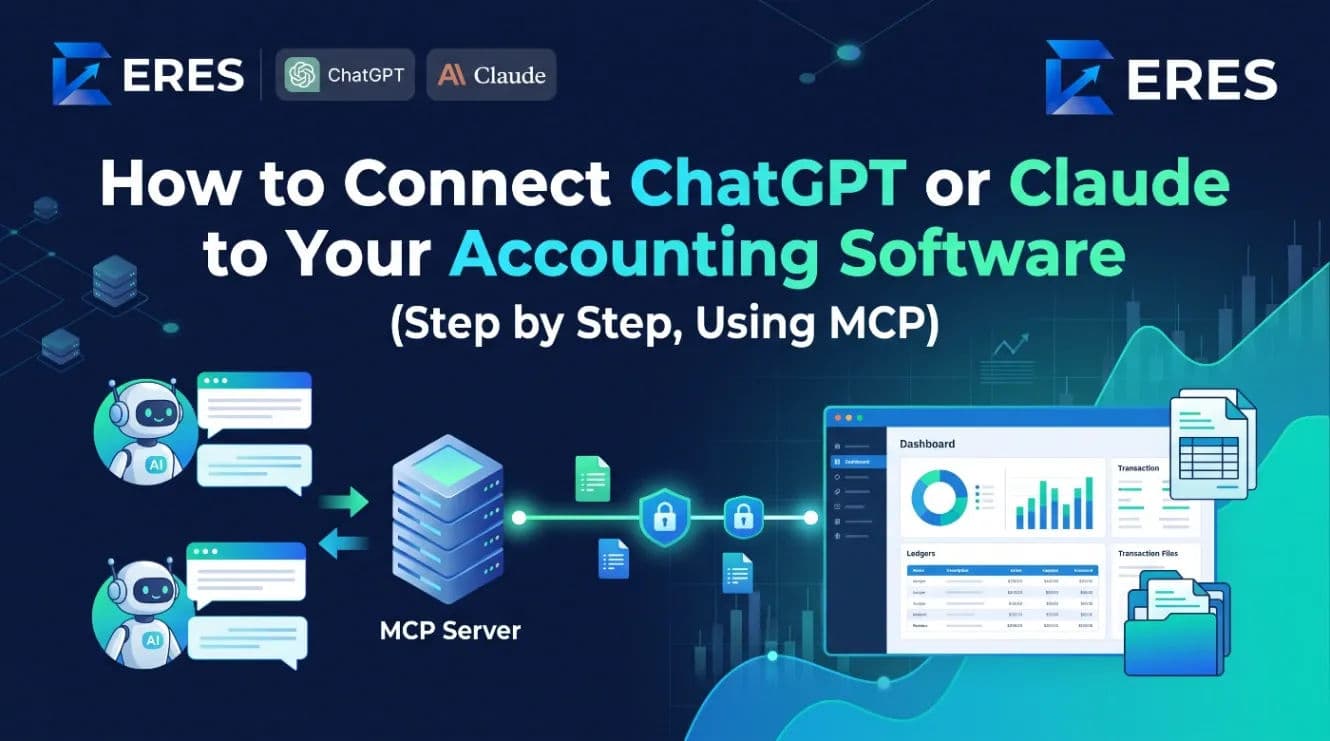
How to Connect ChatGPT or Claude to Your Accounting Software (Step by Step, Using MCP)
You can connect ChatGPT or Claude to your accounting software in a few minutes if the software exposes an MCP server. Here are the steps, the security questions to settle first, twelve prompts worth trying on day one, and the things an AI assistant still should not do with your books.
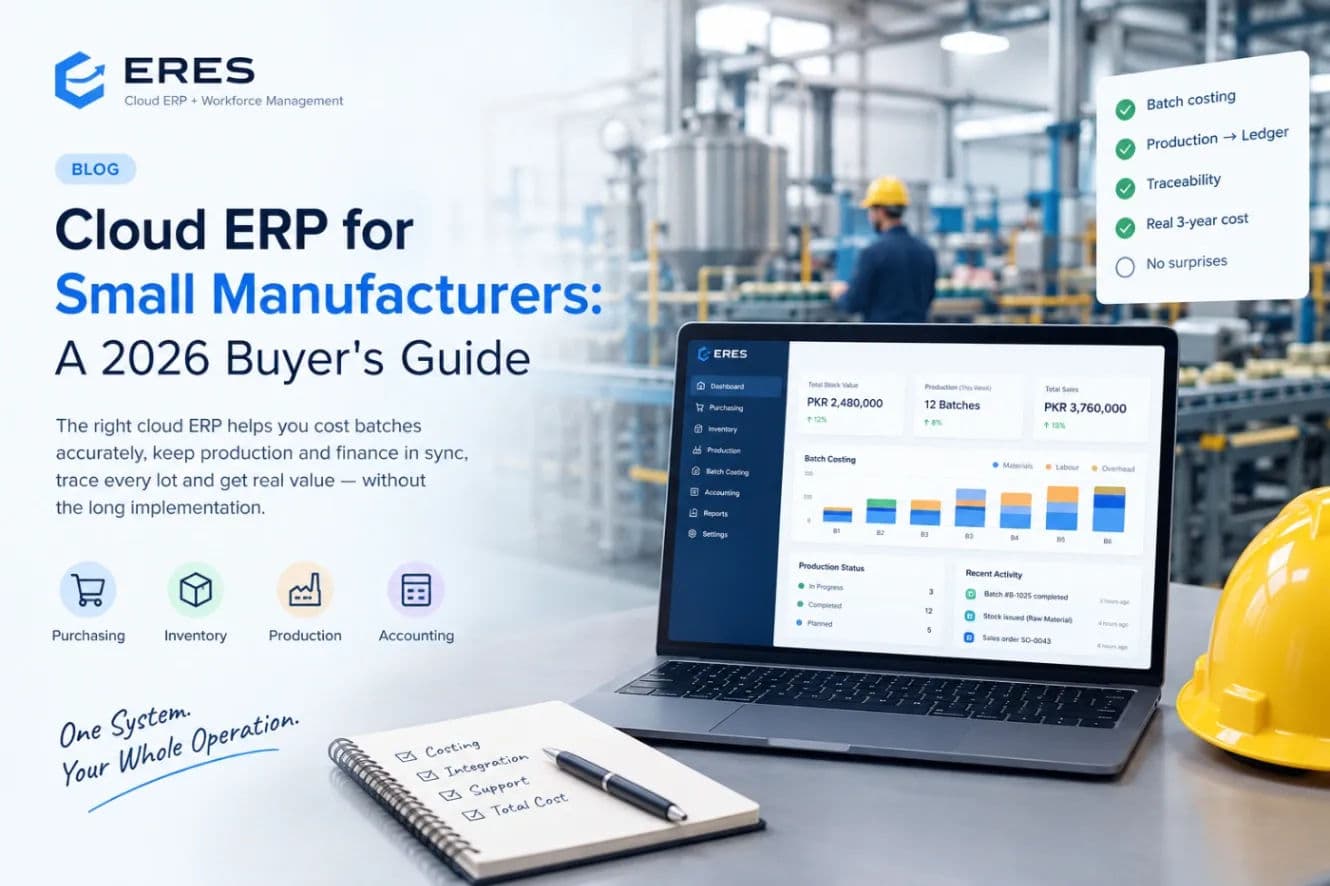
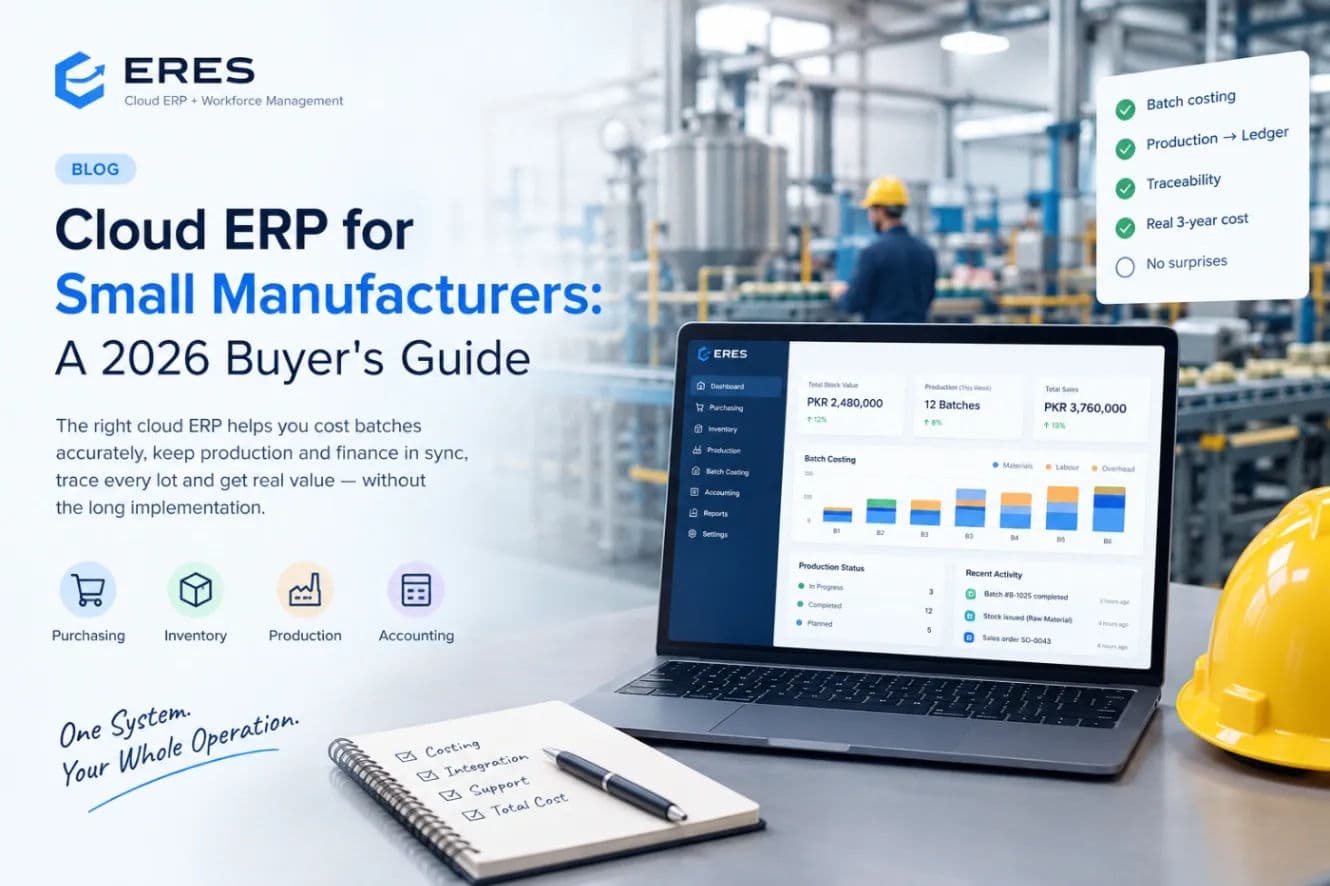
Cloud ERP for Small Manufacturers: A 2026 Buyer's Guide
Choosing a cloud ERP for a small manufacturing business comes down to a handful of questions: does it cost a batch properly, does production post to the ledger, can you trace a lot, and what will it really cost over three years. This guide gives you the checklist, the questions to ask vendors and the red flags.
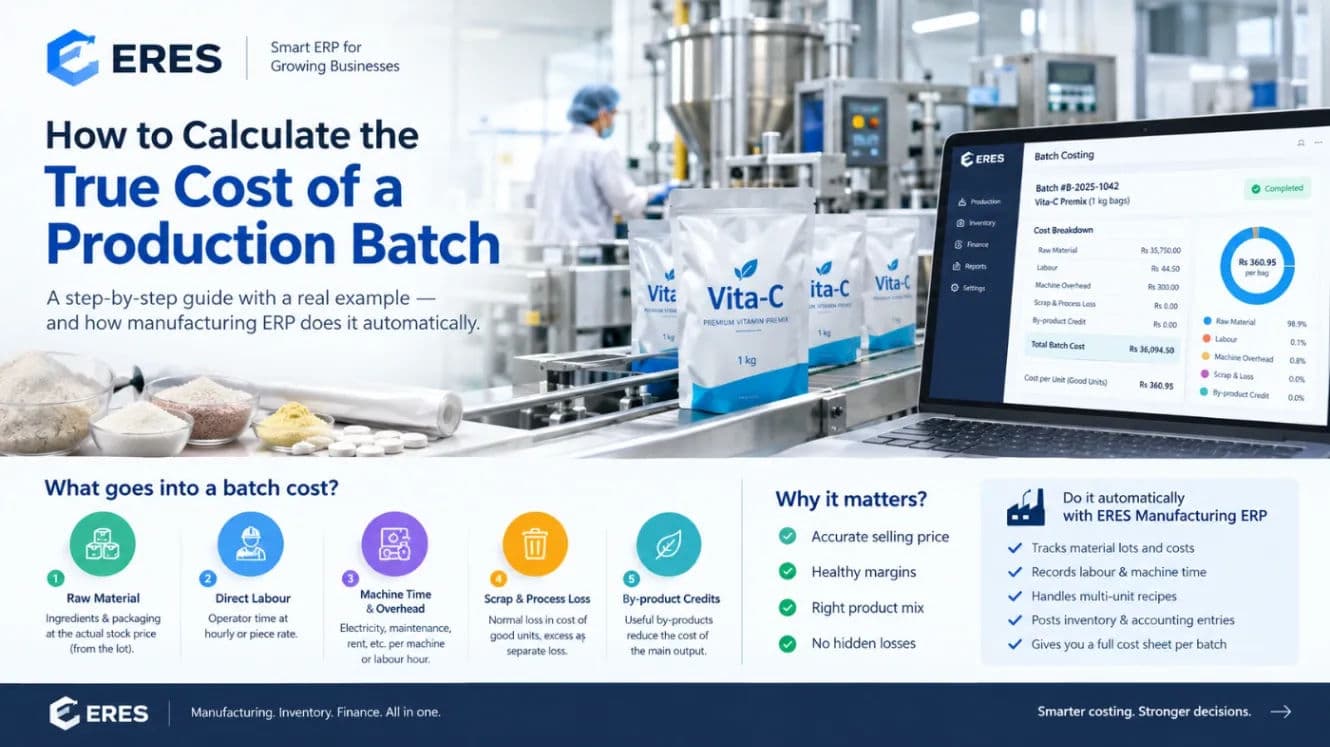
How to Calculate the Cost of a Production Batch (With a Worked Example)
A step-by-step guide to batch costing for Pakistani factories — material at lot cost, labour, machine overhead, scrap and by-products — with a worked example and how manufacturing ERP automates it.
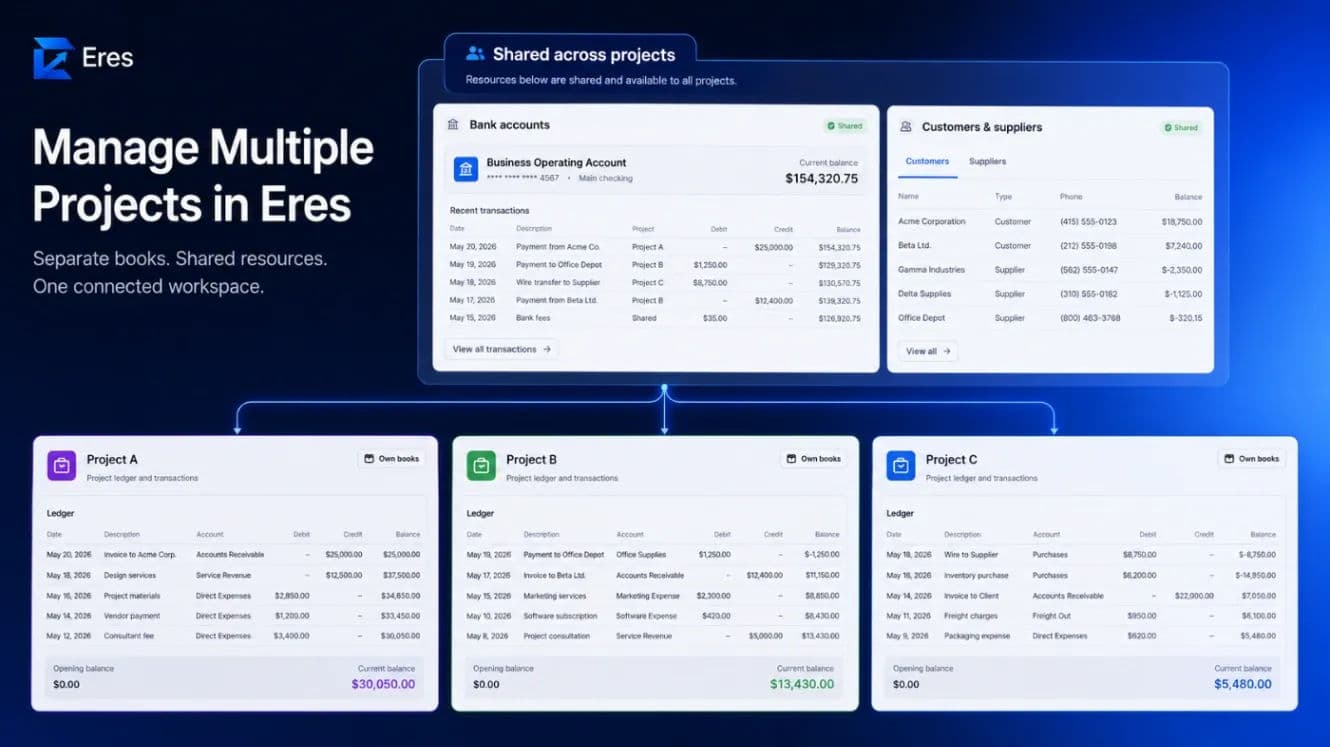
Manage Multiple Projects in Eres: Separate Books, Shared Resources
Learn how Eres helps businesses manage multiple projects with separate books and ledgers while securely sharing bank accounts, customers, suppliers, and other selected resources
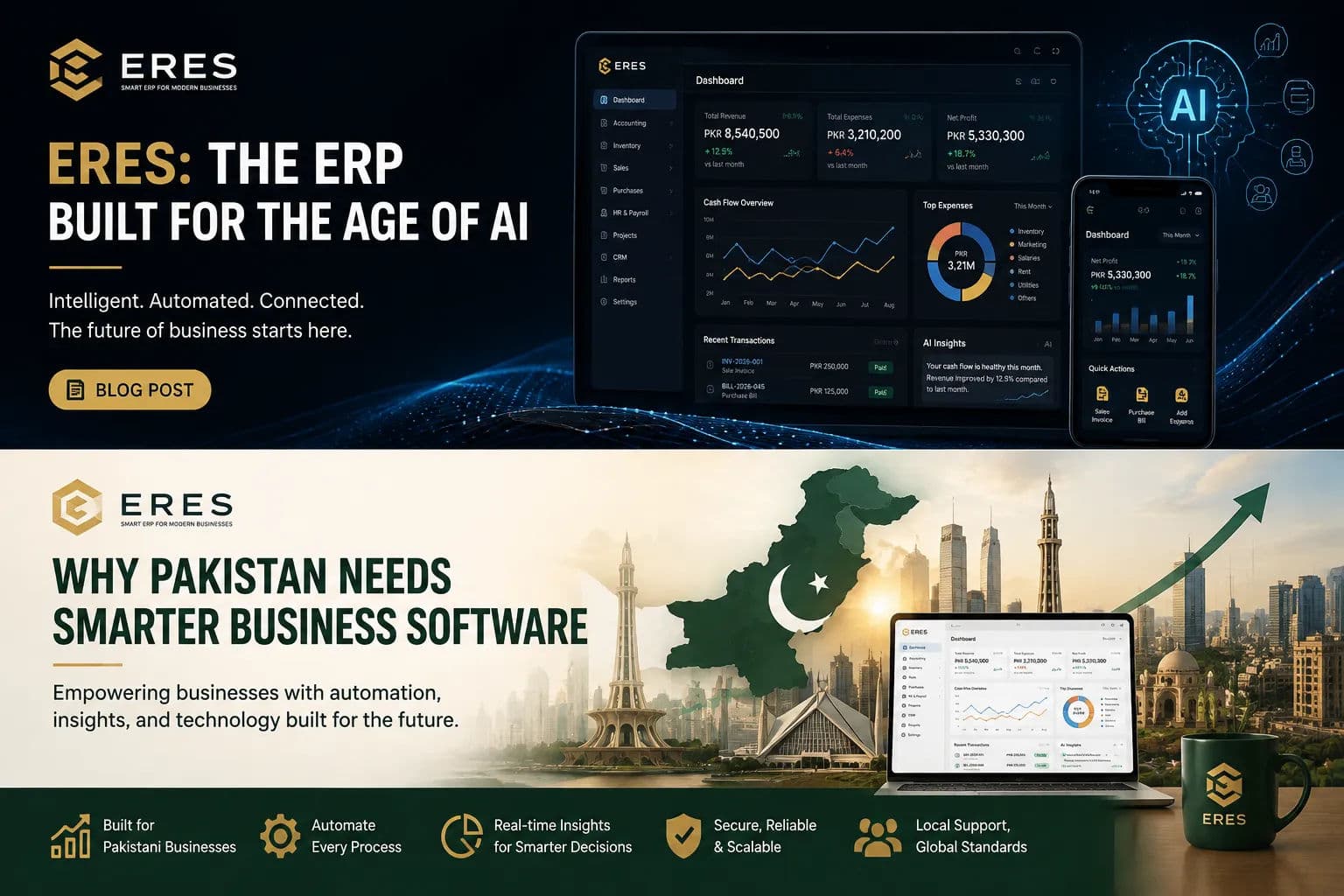
Why Pakistan Needs Smarter Business Software?
Businesses across Pakistan still rely on paper ledgers, spreadsheets and a patchwork of disconnected tools. The result is duplicated effort, delayed reporting and a high risk of non‑compliance with the Federal Board of Revenue (FBR). When the same data must be entered into an invoicing system, a payroll register and a tax return, errors multiply and decision‑makers lose the real‑time insight they need to grow. Smarter business software can eliminate these bottlenecks, but the solution must be built for the local regulatory environment, support multiple functions, and allow secure, role‑based access.
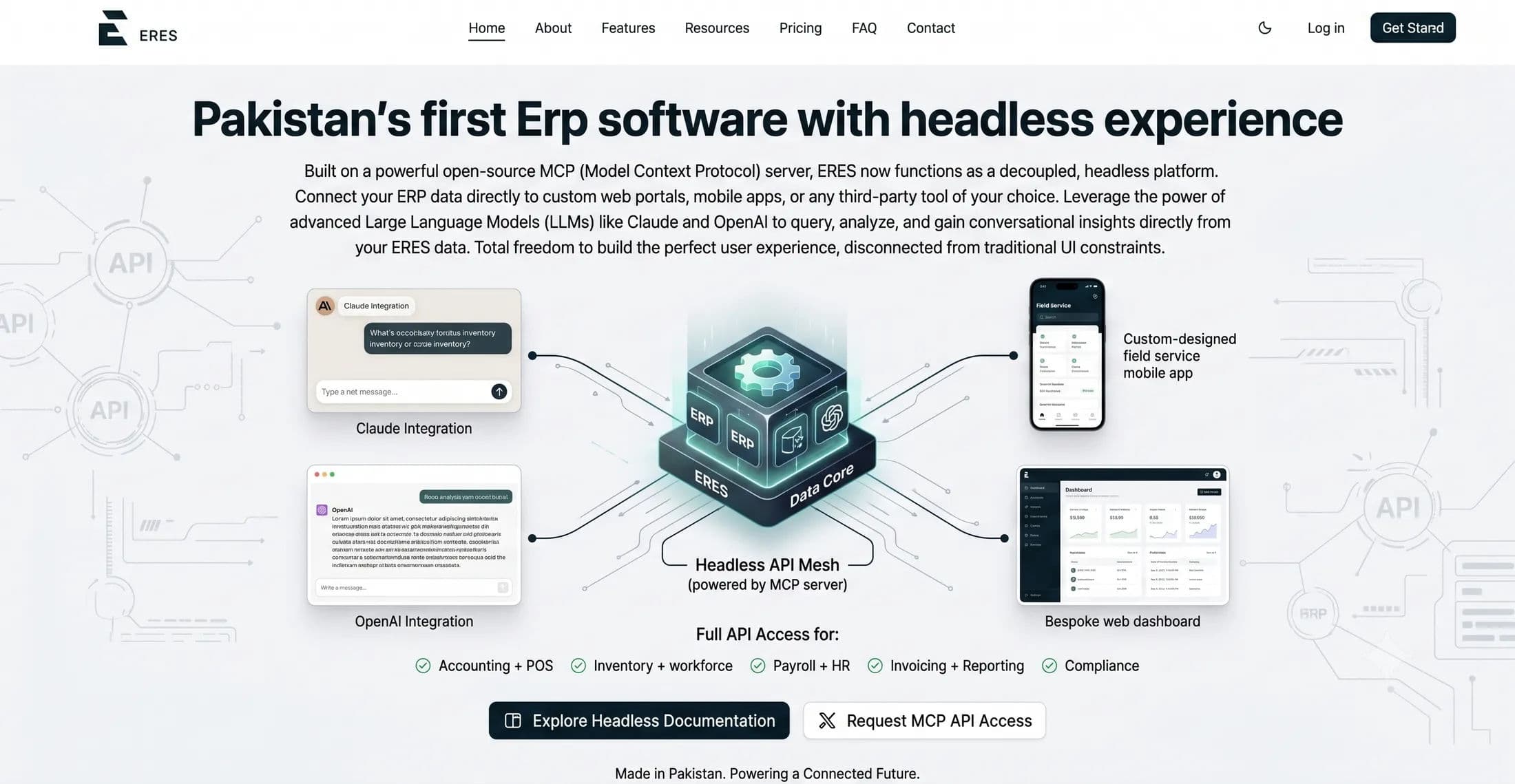
Migrating to Cloud ERP: A Pakistani Business Owner's Checklist
Cloud ERP for Pakistani businesses, streamlining operations
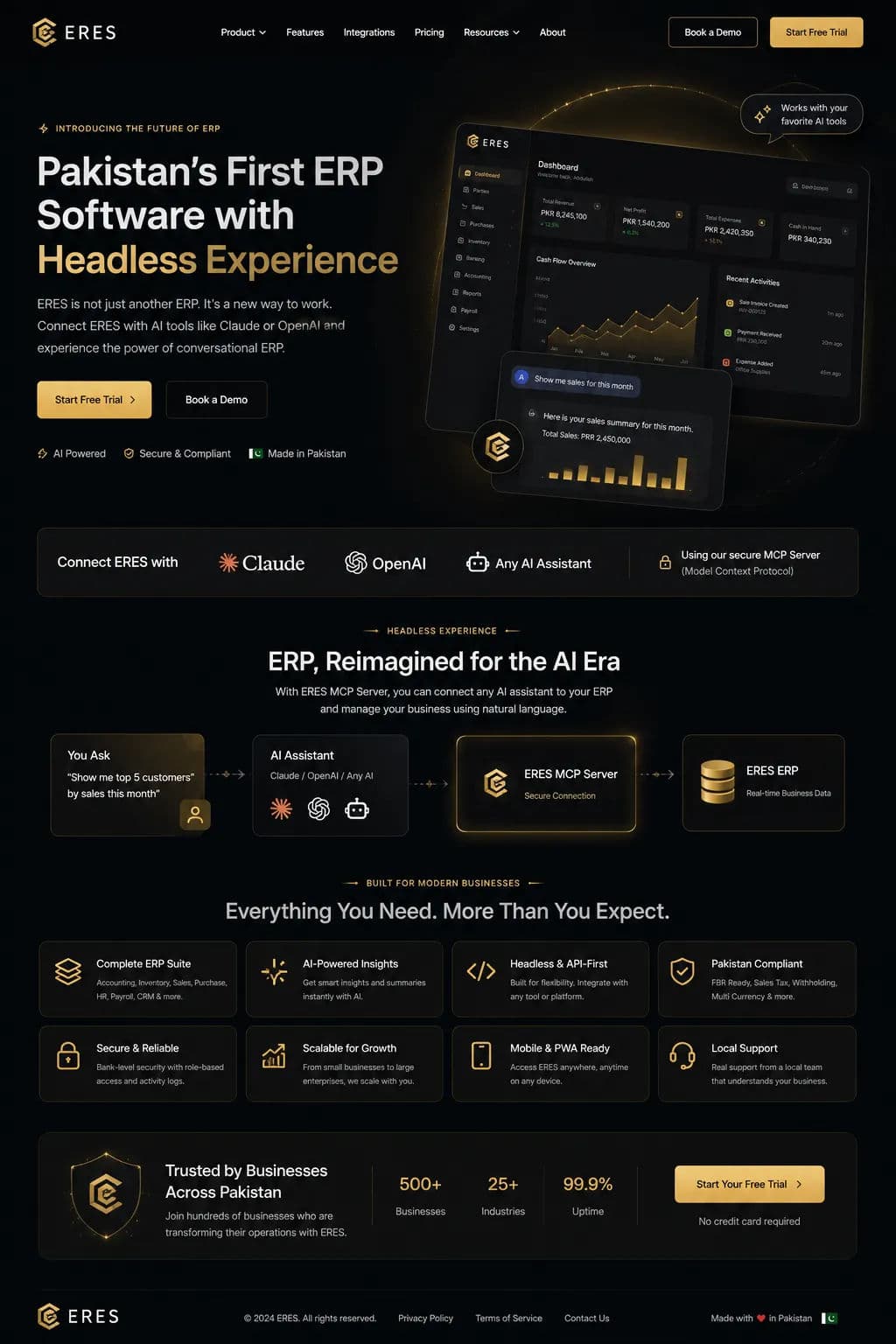
ERES MCP: Streamlining Accounting Workflows in Pakistan
ERES MCP streamlines accounting workflows in Pakistan