Migrating to Cloud ERP: A Pakistani Business Owner's Checklist
Cloud ERP for Pakistani businesses, streamlining operations
Many businesses in Pakistan still rely on manual processes or outdated software for their accounting and enterprise resource planning (ERP) needs. This can lead to inefficiencies, errors, and a lack of visibility into their operations, ultimately hindering their ability to make informed decisions and stay competitive.
Benefits of Cloud ERP
Cloud ERP systems offer a range of benefits that can help modern businesses in Pakistan overcome these challenges. Some of the key advantages include:
- Scalability: Cloud ERP systems can easily scale up or down to meet the changing needs of a business, without requiring significant investments in new hardware or software.
- Accessibility: Cloud ERP systems can be accessed from anywhere, at any time, using a web browser or mobile app, making it easier for teams to collaborate and work remotely.
- Cost savings: Cloud ERP systems typically operate on a subscription-based model, which can help businesses reduce their upfront costs and avoid expensive upgrades and maintenance.
- Automatic updates: Cloud ERP systems are typically updated automatically by the vendor, which ensures that businesses always have access to the latest features and security patches.
Key Features of a Modern Cloud ERP System
A modern cloud ERP system should have a range of features that support the different functions of a business. Some of the key features to look for include:
- Double-entry accounting and financial reporting
- Inventory and stock management
- Point of sale and sales order management
- Payroll and HR management
- Tax and GST configuration for FBR
- Audit trail and financial reporting
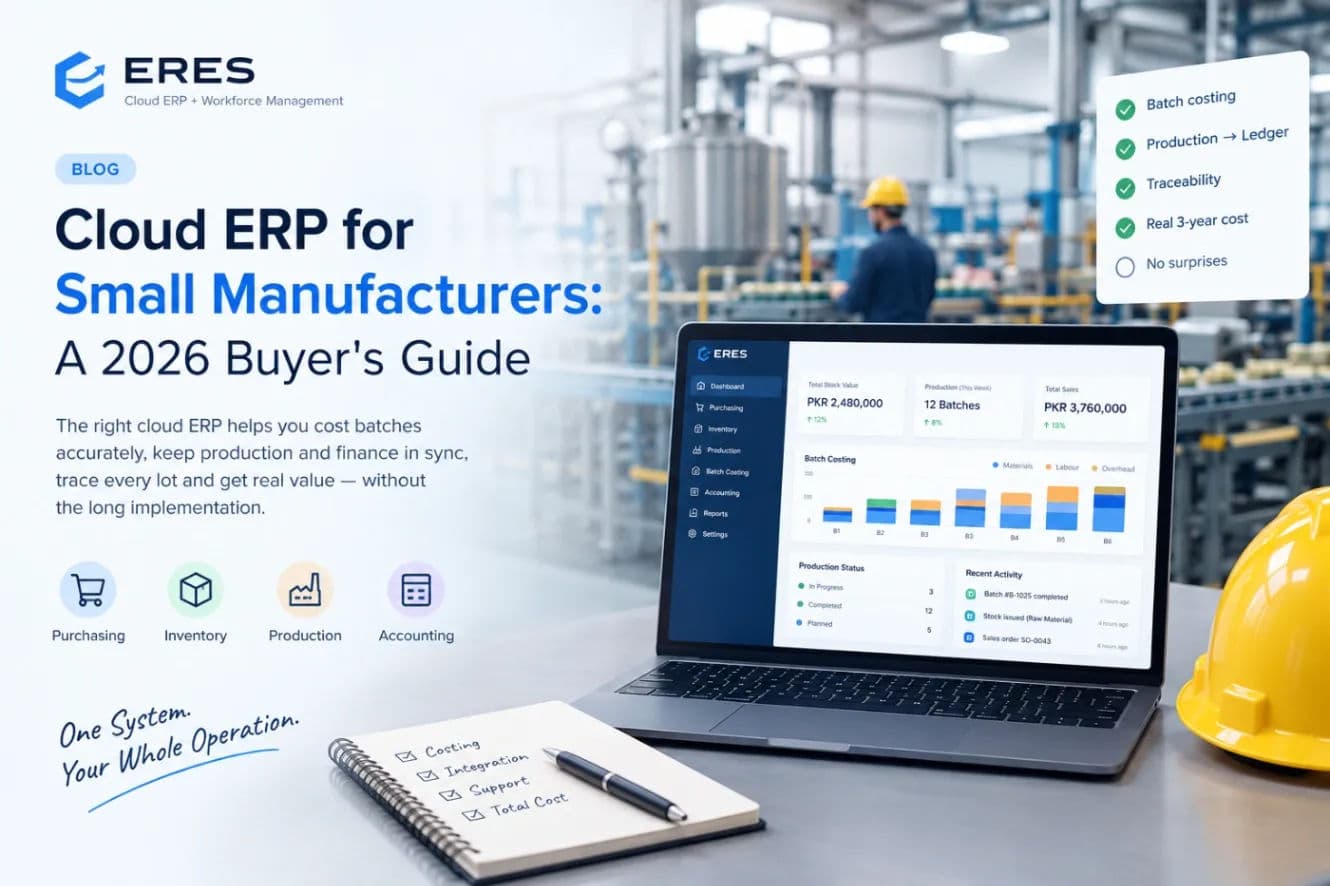
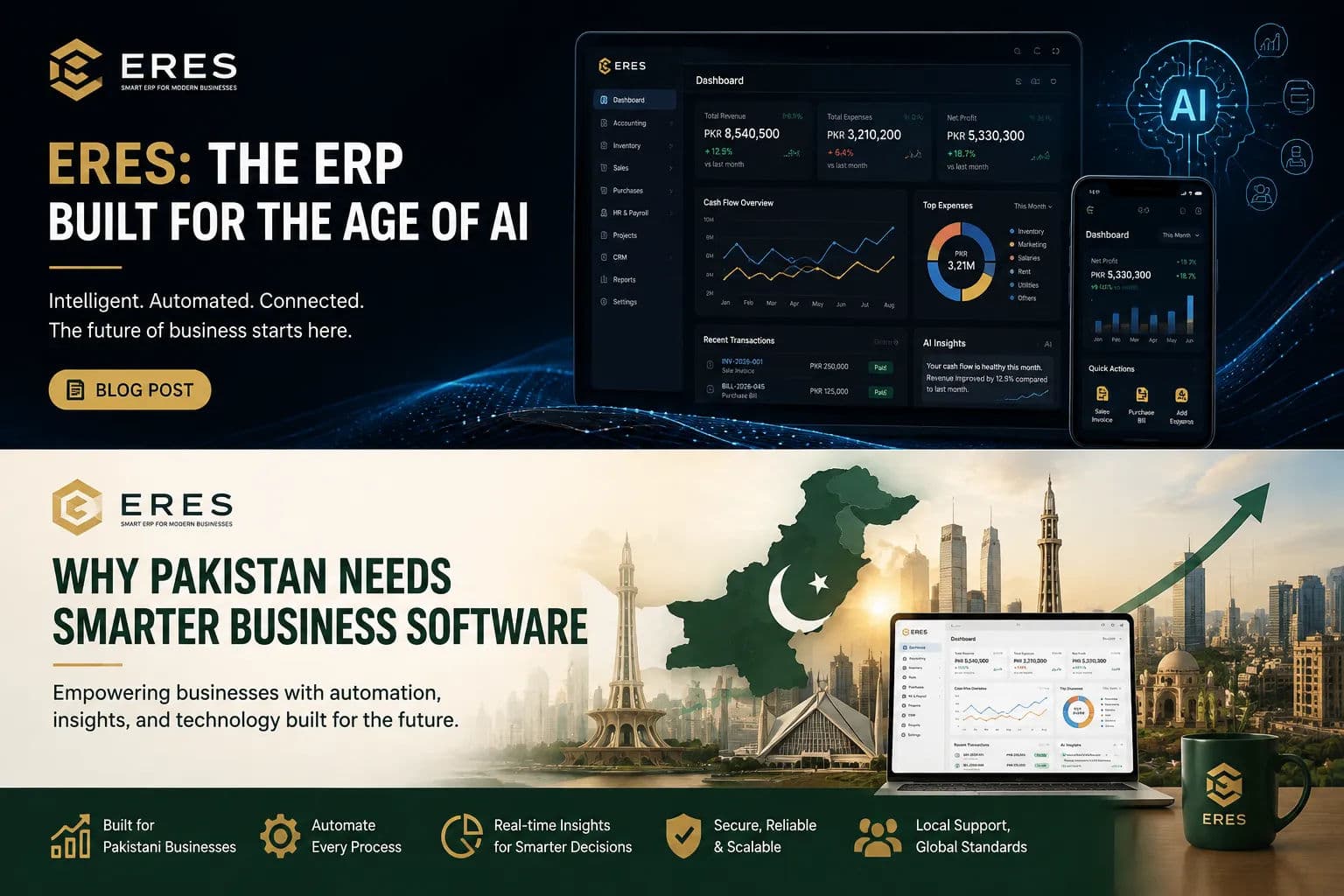
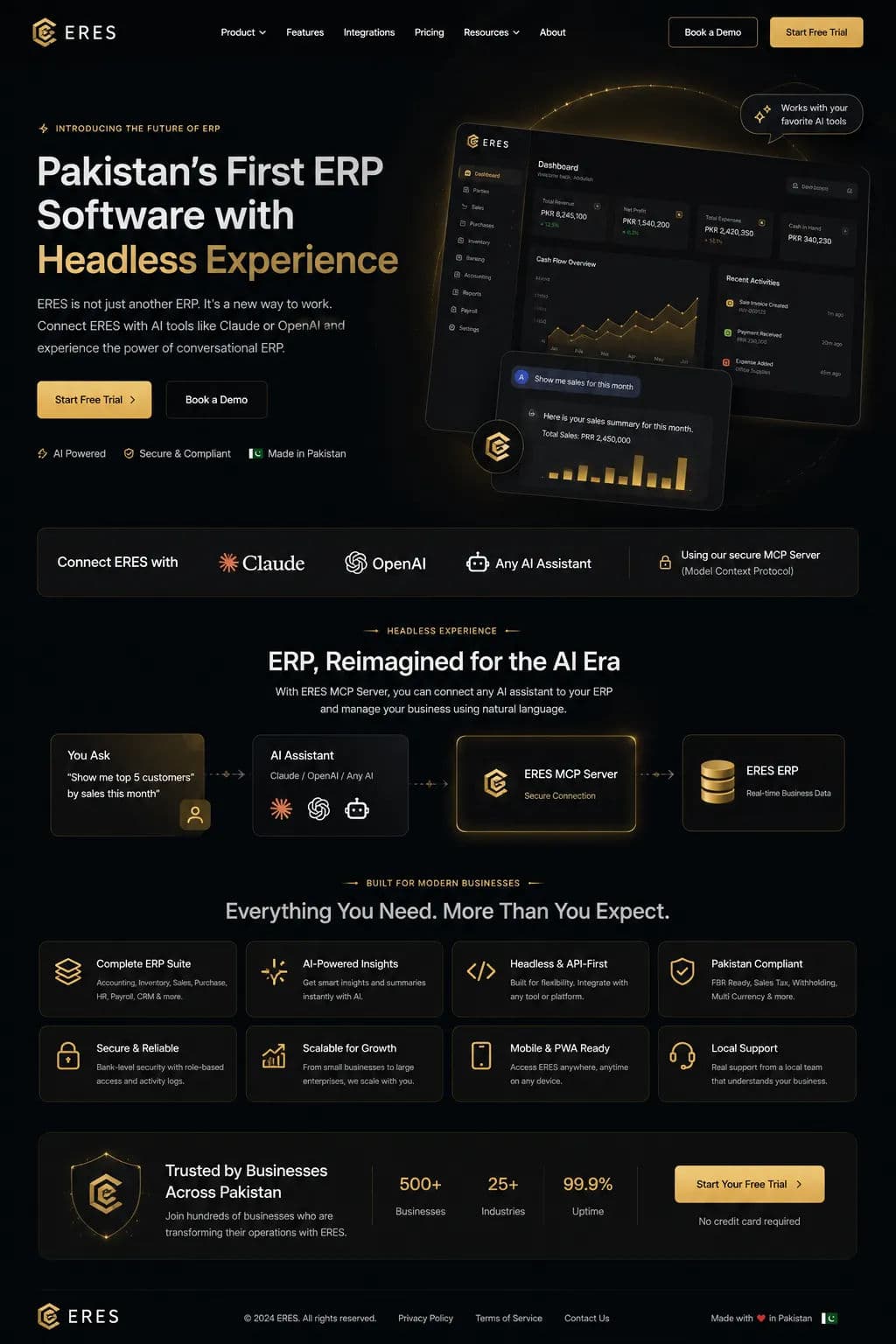
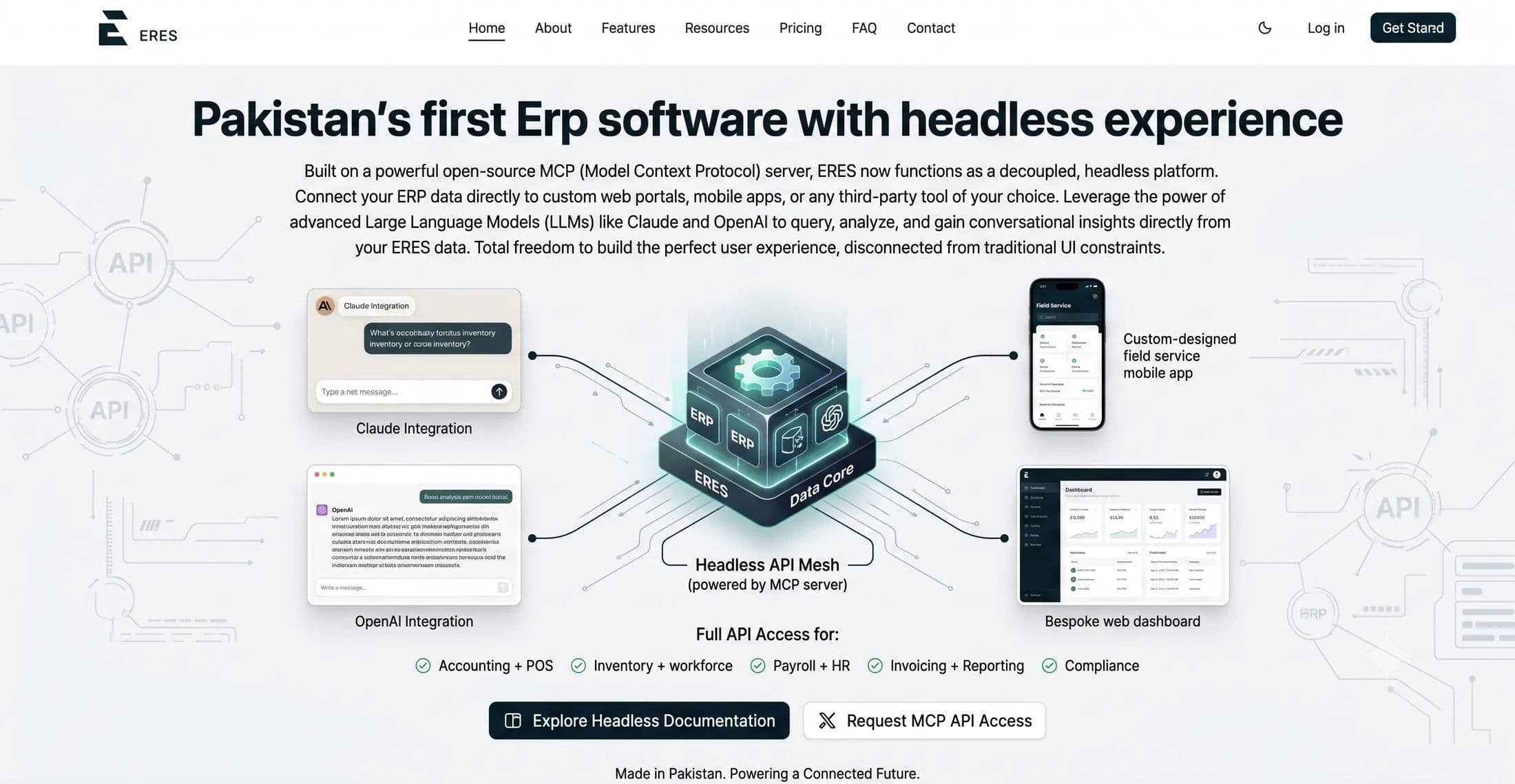
For example, ERES, a cloud ERP and accounting platform built for businesses in Pakistan, offers a range of features that support the different functions of a business, including double-entry accounting, inventory and stock management, and tax and GST configuration for FBR.
Security and Compliance
Security and compliance are critical considerations for any business when selecting a cloud ERP system. Some of the key security features to look for include:
- Data encryption and backup
- Access controls and user permissions
- Audit trail and logging
- Compliance with relevant laws and regulations, such as the FBR's tax and GST regulations
Businesses should also look for cloud ERP systems that have a strong track record of security and compliance, and that offer regular updates and patches to ensure that any vulnerabilities are addressed.
Integration with Other Systems
Many businesses in Pakistan use a range of different systems and applications to manage their operations, including point of sale systems, accounting software, and HR management systems. A cloud ERP system should be able to integrate with these other systems, to provide a seamless and streamlined experience for users.
For example, ERES offers integration with a range of other systems, including point of sale systems and HR management systems, to provide a comprehensive and integrated solution for businesses.
Implementation and Support
Implementing a cloud ERP system can be a complex and time-consuming process, and businesses should look for vendors that offer comprehensive implementation and support services. Some of the key services to look for include:
- Configuration and setup
- Training and user support
- Ongoing maintenance and updates
- Troubleshooting and issue resolution
Businesses should also look for vendors that have a strong track record of customer support, and that offer a range of resources and tools to help users get the most out of their cloud ERP system.
Future-Proofing Your Business
Finally, businesses in Pakistan should look for cloud ERP systems that offer a range of features and tools to help them future-proof their operations. Some of the key features to look for include:
- Artificial intelligence and machine learning capabilities
- Integration with emerging technologies, such as blockchain and the Internet of Things
- Customization and configuration options
- Regular updates and releases
For example, ERES offers a range of features and tools to help businesses future-proof their operations, including integration with emerging technologies and customization and configuration options.
In conclusion, modern businesses in Pakistan need cloud ERP systems to stay competitive and efficient. By selecting a cloud ERP system that offers a range of features and tools, including double-entry accounting, inventory and stock management, and tax and GST configuration for FBR, businesses can streamline their operations, improve their decision-making, and drive growth and profitability. With the right cloud ERP system, businesses can future-proof their operations and stay ahead of the competition.
Run your books on ERES
Accounting, inventory, POS, manufacturing, payroll and tax in one system — and an MCP server so your AI agent can use it too.